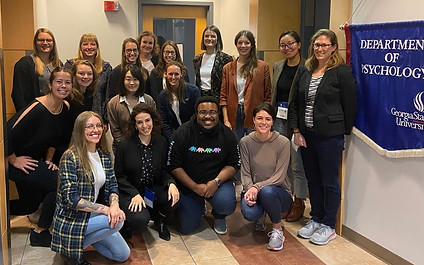
Student section
Student section leader:
Dan Jenkins, Stellenbosch University, South Africa

Student projects committee
Dan Jenkins, South Africa (Chair)
Brit King, United States
Krithika Prakash, United States
Laura Picot, France
Stefanie Rita Balle, Germany
Dany Laure Wadji, Cameroon
Victoria von Rheinbaben, Germany
Sara Abou Chabaké, Canada
Teresa Pirro, Canada
Mohsen Rajabi, United Kingdom
Suman Trivedi, India
Samrat Deb, India
Swathy Sathyapal, India
Leslyette Chevez, United States
Vaitsa Giannouli, Greece
Rachana R Pai, India
Awonke Soga, South Africa
Jandi Newall, South Africa
Rayan El-Haj-Mohamad, Germany
Mohammad Hashim, India
Talia Morstead, Canada
Shay Slifko, United States
Lydia Gamache, Canada
Tanya Tandon, Switzerland
Donna Radley, Australia
Virgínia Daniela da Silva Alves, Portugal
Peehu Rasotra, India
Mónica Fernández Boente, Switzerland
Rachel Kanter, United States
Sarah Bakirci, United Kingdom
Nehir Berra Koç, Türkiye
Khuraman Mammadova, Türkiye
Laura Pareja Conto, Canada
Abhinaya Sridhar, India
Yeukai Mutsa Chideya, South Africa
Marissa Williams, United States
Alison Laas, United Kingdom
Sydni Davila, United States
Nam Nhat Nguyen, Australia
Patricia Rabberger, Germany
Betül Çiçek, Türkiye
Valerie Hofmann, Switzerland
Gillian Wilcox, United States
Monica Carvalheiro, United Kingdom
Ben Spomer, Germany,
Julia S. Rohde, United States
Emma Lacroix, Switzerland
Farida Zeynalli, Germany
Georgina Connors, France
The Global Collaboration on Traumatic Stress emphasizes the importance to bring together trainees, graduate students, medical residents or post-docs across the world to work together on topic of global importance. Students are the future!
Therefore we aim to have students actively involved in the global collaboration, on any theme.
Student projects are projects run by students. Needless to say, students are also very welcome to participate in other projects as well. Check out the different themes and topics.
Current student projects can be found below. If you have ideas or suggestions please email Dan Jenkins,.
Paper in a Day Projects (PIAD)
For early career researchers there is a unique opportunity to collaborate with international colleagues on existing data and to write a manuscript to be submitted for publication ‘in a day’.
Check this page for new PIADs and/or register to receive the announcements through the newsletter.
Upcoming PIADs
tbd
Past PIADs
During the ESTSS conference in Tbilisi June 12:
How to Find, Re-use, and Share Data for Broader Impact: Practical Tools and Tips for FAIR Data (Full Day)
Anke de Haan - Ruhr University Bochum
Denise Hien - Rutgers University
Nancy Kassam-Adams - Children’s Hospital of Philadelphia and Trauma Data Institute
Nino Makhashvili – Ilia State University
Justina Pociunaite – University of Twente
Yaara Sadeh – University of Haifa and Trauma Data Institute
Making research data more FAIR (Findable, Accessible, Interoperable, Re-usable) can broaden the impact of our work and help us answer new research questions. FAIR data practices help avoid duplication of research efforts and reduce participant burden. Data sharing and harmonization enable researchers to undertake integrated analyses of individual participant data across studies, and to expand coverage of groups underrepresented in individual studies. FAIR data can advance translational science for PTSD and traumatic stress. Only with large scale, cross-study datasets can we determine more definitively “what works best for whom” and address the unmet needs of many vulnerable or historically underrepresented groups. Yet many of us struggle to understand what FAIR data practices could look like for our research teams and how these practices can fit into existing workflows. This interactive full-day workshop helped researchers identify feasible initial steps to find, re-use, and share data for greater impact. Participantsgained practical tools and strategies for their own lab and projects. Presented by the Global Collaboration on Traumatic Stress (GCTS) FAIR Data Workgroup, the workshop was designed for researchers at any career stage who are curious about FAIR data or want to implement more FAIR research practices. Presenters have hands-on experience implementing FAIR practices in our own work and integrating cross-study data to conduct novel analyses.
September 2024
PIADs at the International Society for Traumatic Stress Studies’ 40th Annual Meeting in Boston 2024 featured two projects using FAIR datasets, considering
(1) sleep and trauma symptoms among emergency medical service workers and
(2) prolonged grief disorder symptoms among people experiencing non-traumatic and traumatic loss.
December 2023
PIAD Cape Town - 12 December 2023
At the 1st Global Collaboration on Traumatic Stress Conference in Cape Town a Paper-In-A-Day (PIAD) workshop was held on 12 December at Stellenbosch University Faculty of Medicine and Health Sciences. The idea for Paper-In-A-Day was developed by Eva Alisic and first pioneered at an International Society for Traumatic Stress Studies annual meeting. The initiative brings together junior researchers to work together on a defined project that can be submitted for publication. The full-day in-person workshop, led by Jacqueline Womersley and Muneeb Salie of Stellenbosch University, brought together a diverse group to work on a systematic review on early biological psychosocial mechanisms of posttraumatic stress disorder onset and persistence in youth. The six participants represented three countries (South Africa, Botswana, and Nigeria); different backgrounds (basic scientists and clinicians) and varying levels of research experience (postgraduate students, postdoctoral fellows, lecturers, and clinicians). The success of the workshop was thanks to the enthusiasm and hard work of the participants, as well as Eva Alisic, who joined the in-person meeting to share insight into the process and exciting new approaches to collaborative work and brainstorming. The GCTS PIAD laid the groundwork for collaboration and teamwork among an upcoming generation of African researchers.
November 2023
Gender Differences in DSM-5 PTSD Symptom Clusters: A Network Analysis
Project leaders: Anke Witteveen & Mirjam van Zuiden
A successful Paper in a Day project was held at ISTSS in Los Angeles on November 1st 2023 and embodied global collaboration and FAIR data. Early career researchers from around the world collaborated to conduct network analyses using data made available by one of the PIAD leaders’ research project on early prevention of PTSD after trauma. The group included 7 participants from Singapore, Norway, Ghana, and the United States and two supervisors from the Netherlands.
Data from the 2-ASAP study in the Netherlands, provided the starting point for interesting new work to examine gender impact of trauma exposure search paper on differences in early post-trauma PTSD symptom network structures between women and men.
Project: Gender Differences in DSM-5 PTSD Symptom Clusters: A Network Analysis
Resulting paper:
-
Rønning, L., Zelkowitz, R. L., Piccirillo, M. L., Liu, J., Thomas, J. L., Guler, J., Kyei, J. J., Hoeboer, C. M., Karchoud, J. F., Olff, M., Witteveen, A. B., & van Zuiden, M. (2025). Gender differences in early posttraumatic stress disorder symptoms: A network analysis. European Journal of Psychotraumatology, 16(1), 2448385. https://doi.org/10.1080/20008066.2024.2448385
-
November 2022
Two successful Paper in a Day projects embodied global collaboration and FAIR data in action at ISTSS in Atlanta. Early career researchers and trainees from around the world collaborated to conduct novel analyses using accessible data resources made available through the Global Collaboration and its projects. The two project groups included 17 participants from 10 countries (Australia, the Czech Republic, Germany, Israel, Korea, Mongolia, the Netherlands, Norway, United Kingdom, and United States).
In both projects, easily accessible data resources, from studies conducted in multiple countries, provided the starting point for interesting new work to examine the impact of trauma exposure.
An Exploration of Trauma-Related Symptoms and Symptom Patterns Across the World
Project leaders: Hope Christie & Anke de Haan
Using openly available data from the Global Collaboration’s Global Psychotrauma Screen project.
Resulting paper:
-
Haering, S., Kooistra, M. J., Bourey, C., Chimed-Ochir, U., Doubková, N., Hoeboer, C. M., … de Haan, A. (2024). Exploring transdiagnostic stress and trauma-related symptoms across the world: a latent class analysis. European Journal of Psychotraumatology, 15(1). https://doi.org/10.1080/20008066.2024.2318190
A Qualitative Analysis of the role of PTSD and PTG in Family Experiences of having a relative in Vegetative and Minimally Conscious States
Project leaders: Anna Denejkina and Yaara Sadeh
Using accessible multi-study data from the Child Trauma Data Archives project (part of the FAIR Data theme).
Resulting paper:
-
Sadeh, Y., Graham, L., Curtis, M., Janson, M., Kim, J., Schwartz, A., … Denejkina, A. (2024). Posttraumatic stress and depression symptom classes in parents of trauma-exposed children: a transdiagnostic perspective using pooled individual participant data. European Journal of Psychotraumatology, 15(1). https://doi.org/10.1080/20008066.2023.2299194
The Student Section
We, at the Global Collaboration, are interested in recruiting student leaders from various countries who will have a chance to conduct research and collaborate with other students and faculty in conducting research on topics of global importance.
Please spread the news about this initiative to students who you believe might be a good fit for the committee. If you want to join, let us know by clicking here. If you have any further questions or concerns, please reach out to Dan Jenkins,
Find a supervisor!
The Global Collaboration on Traumatic Stress is a worldwide network of trauma researchers who are passionate about training the next generation.
We have a list of researchers who are open to receiving applications to work with them. You can filter by country, language, level of supervision or work offered, and read more about the work that they do in their labs. If you find someone who's work interests you, send them an email and they would be happy to chat about available opportunities.
If you or someone you know would be interested in hosting students, let us know by clicking here.
Global Perspectives on Culturally Sensitive Trauma Training
Project leader: Krithika Prakash, Eastern Michigan University, Michigan, US
Aims
Bring together a team of student researchers across the world with the goal of understanding the quality of culturally sensitive trauma training provided to them, and answer the following questions:
-
What does "culturally-sensitive trauma training" mean across cultures?
-
What kind of training is provided regarding best practices for trauma-informed care?
-
Where do trainees learn about trauma-informed care- courses, workshops, seminars, direct patient contact?
-
What areas do trainees feel like further guidance and training is needed?
Do trainees feel ready to independently assess and treat traumatic stress cases in their communities?
Status
We will shortly be collecting data in the USA, France, Portugal, Viet Nam, and Switzerland. Collaborators are welcome!
GPS-Age
Age of trauma exposure and its transdiagnostic consequences: Findings from the Global Psychotrauma Screen
Project leader: Dan Jenkins, Stellenbosch University, South Africa University, South Africa
Project group: Teresa Pirro, McGill University, Canada; Leslyette Chevez, Regent University, USA; Vaitsa Giannouli, Hellenic Open University, Greece; Victoria von Rheinbaben, LMU Munich, Germany; GCTS Student Section.
Currently looking for collaborators, please contact the project leader if interested.
Background
The experience of trauma can have a lifelong impact on an individual’s mental and physical health. Age of exposure to a traumatic event is of particular interest to understanding the development of trauma-related symptoms due to traumatic events’ propensity to happen at any time, including during vulnerable developmental periods.
Aims
This project aims to establish whether the relationship between trauma exposure and the severity of traumatic symptoms (as measured by the GPS [Global Psychotrauma Screen]) is moderated by age of exposure or duration of exposure to these traumatic events, and whether this moderation holds across different measured trauma types and different geographical regions.
Methods
Using existing FAIR data (Kassam-Adams & Olff, 2020; Olff, 2020) collected in previous studies on the GPS (Olff et al., 2020, 2021), this quantitative project will involve a secondary analysis of adults’ GPS data (N = 10,299).
Status
Article submitted to journal.
Student Involvement in Trauma Research
Project leader: Sara Abou Chabake
Background
Historically, the PTSD diagnosis was introduced in the DSM-III in 1980, following the Vietnam War, to address the need to recognize trauma in U.S. soldiers. This illustrates how trauma psychiatry has been shaped by North American influence and later applied to other parts of the world, often without considering differences in context, population, or culture. Students can play an important role in bridging this gap through active participation in the research process. They often engage in exchange programs, student initiatives, and collaborations with professors from various institutions (internships, volunteering, committees). They are highly mobile across universities and countries and could bring a more global perspective often free from the constraints of tenure and funding pressures that many researchers face. International students can contribute by their knowledge of many languages and offering cultural insights into the conceptualization of a research project. Students, particularly those from affected areas or diverse backgrounds, bring valuable lived experiences or contextual knowledge to research teams.
Aim
This paper aimed to advocate for the integration of student-led contributions in trauma research and emphasizes how establishing student-led sections could significantly advance the field by incorporating diverse perspectives, particularly from underrepresented regions.
Status
Project completed
-
Chabake, S. A., Wadji, D. L., Pirro, T., Kanter, R. L., Jenkins, D., Giannouli, V., … Pfaltz, M. C. (2025). Students in global traumatic stress research: an opportunity for meaningful and equitable involvement. European Journal of Psychotraumatology, 16(1). https://doi.org/10.1080/20008066.2025.2592407
Congratulations to Dany Laure Wadji
for winning the second prize for a
poster on GCTS project:
"Associations entre expériences de maltraitance dans l'enfance et acceptabilité perçue de la maltraitance envers enfants: Une étude interculturelle exploratoire"
by Dany Laure Wadji, Misari Oe, Polly Cheng, Eleonora Bartoli, Chantal Martin-Soelch, Monique, C. Pfaltz, Rachel Langevin.
The poster was presented at the 11th Congress on Child and Adolescent Abuse, Montréal, October 2023.